The Welcome Slice: Christening and Naming Day Cakes for a Room Full of People
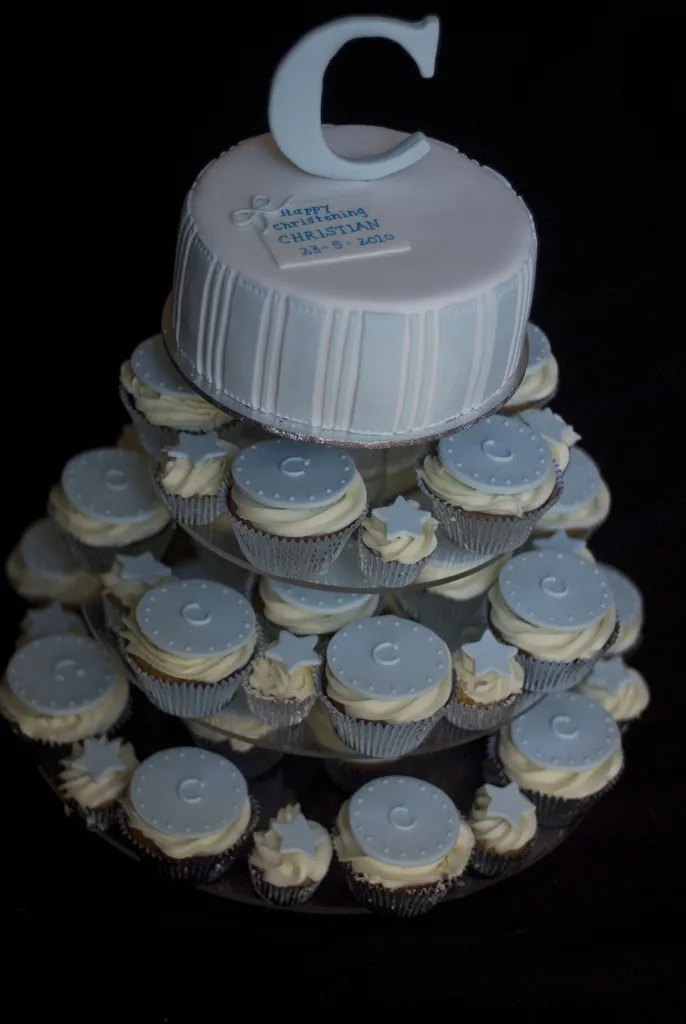
Photo: mags, CC BY-SA 2.0, via Wikimedia Commons
Christenings and naming days have a lovely way of filling a room with people who don’t usually share a table. There’s a baby at the centre of it, of course, but around them sit grandparents, godparents, cousins, neighbours, and at least one person who has brought a tub of sandwiches just in case. The cake needs to make sense for all of them.
That’s the quiet challenge. A christening cake isn’t quite a birthday cake, and it isn’t quite a wedding cake. It’s a welcome cake. It needs to look as though it belongs to the day, taste good to a five-year-old and an eighty-five-year-old, and carry a name that feels personal rather than printed in a hurry. The good news is that this is a very forgiving brief.
Start with the shape of the day, not the shape of the cake
Before you fall down a Pinterest hole of sugar roses and hand-piped monograms, think about where the cake will actually sit. A church hall with trestle tables and a tea urn has a different mood from a marquee in a garden or a quiet lunch in a favourite café. Neither is better. They just ask for different things.
For a traditional service followed by an afternoon tea, a single-tier cake with a clean finish and a simple inscription often feels right. It can sit alongside fairy cakes and finger sandwiches without competing. For a less formal naming ceremony — humanist, celebrant-led, or simply a gathering at home — you can lean into colour, texture, or a flavour that feels like the family’s own. A lemon and elderflower cake with soft buttercream and a few fresh flowers can be every bit as “christening” as a white icing dome.
If there’s a theme, let it be a light one. A few woodland animals, a sprig of foliage, a favourite nursery rhyme. The cake doesn’t need to explain the whole day. It just needs to feel like it was made for this family, on this occasion.
The name is the point, so keep the words steady
A name in icing is a small piece of ceremony in itself. It’s the bit people lean in to read. So give it room.
For a christening, the full name used at the service — including any middle names — usually feels most meaningful. For a naming day, you might choose the name the child is actually called, rather than the longer version on the paperwork. Either is fine. The trick is to decide early and spell it out clearly in your order, including any accents or unusual capital letters. It’s much easier to check a name twice at the brief stage than to explain a missing apostrophe to a room of relatives.
A short blessing or a date underneath can work beautifully, but it isn’t compulsory. “Welcome, Ada” is a complete sentence. “Ada Grace — 11 April 2026” tells its own story. If you want a verse, keep it short enough to read from standing height. Long inscriptions can look crowded, and they’re harder to get right in buttercream.
Portions for a guest list that spans three generations
Mixed-age crowds are lovely, but they don’t eat like a room of adults at a wedding. Toddlers want a small slice and no fondant. Grandparents may want a proper piece with a cup of tea. Teenagers appear from nowhere for a second helping. It’s worth planning generously, but not wildly.
As a friendly rule of thumb for a celebration cake served alongside other food, aim for slightly smaller portions than you would for a standalone dessert. A 6-inch round cake comfortably serves around 12 to 15 small slices; an 8-inch round gives you roughly 20 to 24. If the cake is the only sweet thing on the table, nudge those numbers up. If there’s a pudding table, keep them modest. Home bakers would much rather you order a size that gets finished than a tier that leaves everyone politely declining a second slice.
And if the guest list is genuinely uncertain — as christening guest lists often are — it’s worth asking about a small cutting cake plus a tray of matching cupcakes. It takes the pressure off the portions and gives children something easy to hold.
Dietary needs without the drama
Christenings and naming days often include guests with allergies or dietary preferences, and it’s kind to think about them before the day. A gluten-free celebration cake can be made beautifully, but it’s worth ordering it as a separate small cake rather than asking for the main cake to be “gluten-free for everyone” if you’re not sure how it will be received. The same goes for dairy-free and vegan requests.
If you’re ordering from a home bakery, be upfront about the number of guests who need an alternative and whether cross-contamination is a concern. A good baker will tell you honestly what’s possible in their kitchen. It’s not about being difficult; it’s about making sure the person with the allergy gets a slice without a side order of anxiety.
A few practical bits that make the day easier
Ask for the cake to be boxed in a way that survives a car journey and a church hall. If it’s being collected the day before, keep it cool and flat. If it’s being delivered, confirm the time window and whether the venue has a fridge. And if children will be helping to cut it, a sharp knife and a steady adult hand are more useful than a complicated centrepiece.
Most of all, remember that a christening cake doesn’t have to be grand to be memorable. It has to be eaten, enjoyed, and photographed with a baby who is probably more interested in the ribbon than the icing. A name in careful lettering, a flavour that suits the family, and enough slices to go round — that’s the welcome. The rest is just decoration.