No Side Plate Required: A Gluten-Free Celebration Cake for the Whole Table
There’s a particular look that comes over a guest when they’re told, kindly but firmly, that there’s “a separate little cake” for them in the kitchen. It’s grateful, but slightly deflated. Celebration cakes are about belonging as much as they are about buttercream. So when someone at the table can’t have gluten, the aim isn’t to solve a problem quietly in the background. It’s to make sure they get a proper slice, on a proper plate, with everyone else.
Start with a quiet question, not a clipboard
Asking guests about allergies and intolerances is best done early and without drama. If you’re sending invitations, a simple line works wonders: “Any allergies or intolerances I should know about? No fuss — just want to make sure there’s plenty for everyone.” That phrasing gives people room to mention coeliac disease, a wheat allergy, a sensitivity, or simply a preference without feeling like they’re causing trouble.
If you’re organising the cake for a family party, a private message is often kinder than a group chat. Ask how serious the need is. There’s a world of difference between someone who avoids gluten where possible and someone with coeliac disease, for whom cross-contamination matters a great deal. You don’t need a medical history, but you do need to know whether “gluten-free” means “please avoid” or “please be very careful.”
The generous option is often one cake for everyone
If the dietary need is an intolerance or a preference, the simplest and most welcoming solution is frequently to make the whole celebration cake gluten-free. Done well, no one at the party needs to know unless you tell them. A lemon and almond cake, a flourless chocolate torte, a polenta and orange number, or a properly made gluten-free carrot cake can hold their own against any wheat-based bake.
The trick is not to treat gluten-free as a punishment. Avoid the dry, crumbly stereotype by choosing recipes that are naturally moist: ground almonds, melted chocolate, yoghurt, citrus syrup, or a generous buttercream. A gluten-free Victoria sponge is perfectly possible, but it needs a good flour blend and a gentle hand. At Cakes by Dawn, the aim is always that the gluten-free slice is the one people go back for — not the one they politely nibble.
If the guest has coeliac disease, talk openly with your baker about what can be guaranteed. A home bakery is not a medical facility, and honesty matters more than a reassuring nod. Some home bakers can make a gluten-free cake in a clean, carefully scheduled way; others will recommend a separate, sealed gluten-free bake from a specialist. Either is fine, as long as everyone knows the score.
Cross-contamination: calm, clear and practical
Cross-contamination is the part that worries people most, and rightly so. In a home bakery that also bakes with wheat flour, flour dust can travel. A responsible baker will clean down surfaces, use separate bowls and tins where possible, schedule gluten-free bakes first thing, and store the finished cake wrapped and labelled. They should also be honest about what they can’t promise.
If you’re ordering for someone with coeliac disease, ask direct questions: Is a separate tin used? Is the cake stored away from wheat bakes? Are decorations checked for gluten? Is the buttercream made in a clean bowl? You’re not being difficult. You’re being a good host. A baker who welcomes those questions is usually the one you want.
At the party itself, keep the gluten-free cake away from the bread basket and use a clean knife and server. If the whole cake is gluten-free, say so clearly and let everyone tuck in. If you’re serving a separate gluten-free cake alongside a wheat-based one, label it and keep it on its own plate. A little signage saves a lot of hovering.
Flavours and decorations that don’t feel like a compromise
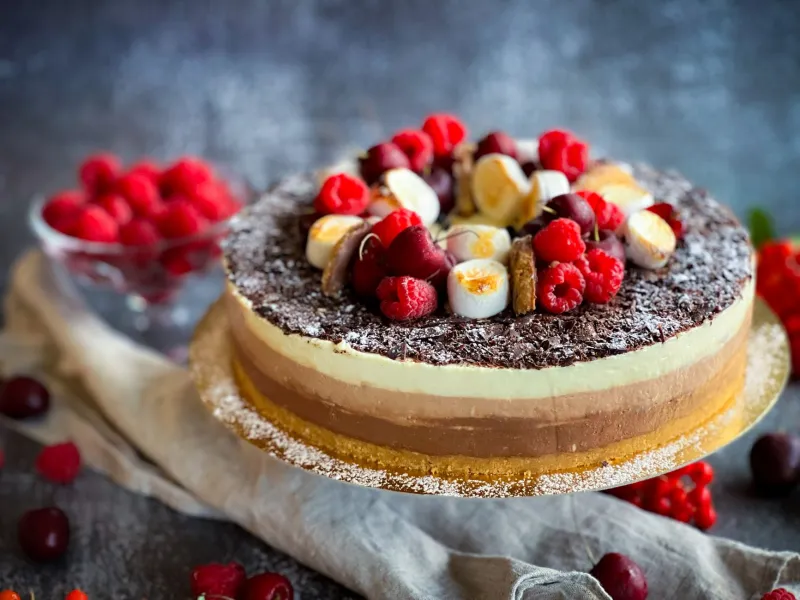
UK-friendly gluten-free celebration flavours tend to be the ones that are naturally rich or moist. Think chocolate and raspberry, lemon and almond, coffee and walnut (if nuts are welcome), orange and polenta, or a vanilla sponge made with a reliable gluten-free blend. Fresh berries, Swiss meringue buttercream, chocolate shards, edible flowers and piped rosettes all work beautifully without relying on wheat-based decorations.
Do check the small things. Sprinkles, colourings, icing sugar, marzipan and some shop-bought decorations can contain gluten or be produced in a facility that handles it. A quick label check is worth it. And if you’re using a bakery, mention any other allergies too — nuts, dairy and eggs often travel alongside gluten-free orders.
Ordering without the afterthought
The best gluten-free celebration cake is ordered the same way as any other: with a bit of thought and a decent amount of notice. Tell your baker who the cake is for, how many people are coming, and whether the whole cake needs to be gluten-free or just a portion. Don’t ask for “just a slice” cut from a wheat cake for a coeliac guest — crumbs are not a garnish.
If you’re the guest with the dietary need, say so early and cheerfully. A good baker would much rather know at the enquiry stage than the day before. And if you’re the host, remember the point of the cake. It’s not a test of dietary admin. It’s a shared moment, with candles and a knife and everyone leaning in. No one should be watching from the side with a fork and a brave smile.
A celebration cake should feel like an invitation, not an exception. With a little planning, a gluten-free bake can be the centrepiece — and everyone gets a proper slice.